
Moncton, NB
Retaining walls for slopes and erosion in Moncton
Slope and erosion-control retaining walls can help Moncton property owners manage a defined bank where soil is moving onto lower ground. We install retaining systems when wall support is appropriate to the assessed conditions. This guide explains the difference between surface washout and wider slope movement, and why drainage must be considered with the wall.
When can a retaining wall help with erosion?
A retaining wall can help with erosion when a supported change in level forms part of a plan to keep soil in place and control how water crosses the site. A bare bank that sheds soil onto a path may need a different response from a large slope that is moving as a whole. The wall must address the actual condition rather than cover the visible damage. If concentrated runoff continues unchecked, erosion may simply move to the wall ends or base. We assess the extent of soil loss, the slope above and below, and the water routes before recommending construction. Vegetation, grading, or drainage may be needed alongside the retaining structure to make the overall treatment effective.
How does surface erosion differ from slope instability?
Surface erosion removes soil from the outer layer, often leaving small channels, exposed roots, or sediment at the bottom of a bank. Slope instability involves movement within a larger mass of ground and may show as cracks, bulging, or changing levels. The two can occur together, but they are not solved by the same assumption. A small wall at the toe of a deep moving slope may be inadequate or inappropriate. We treat signs of broader movement as a reason for further geotechnical assessment before defining the wall work. Accurate diagnosis matters because a visually neat finish can hide an unresolved problem. Describe the size and development of any cracks without approaching ground that appears unsafe.
Why must runoff be controlled above the wall?
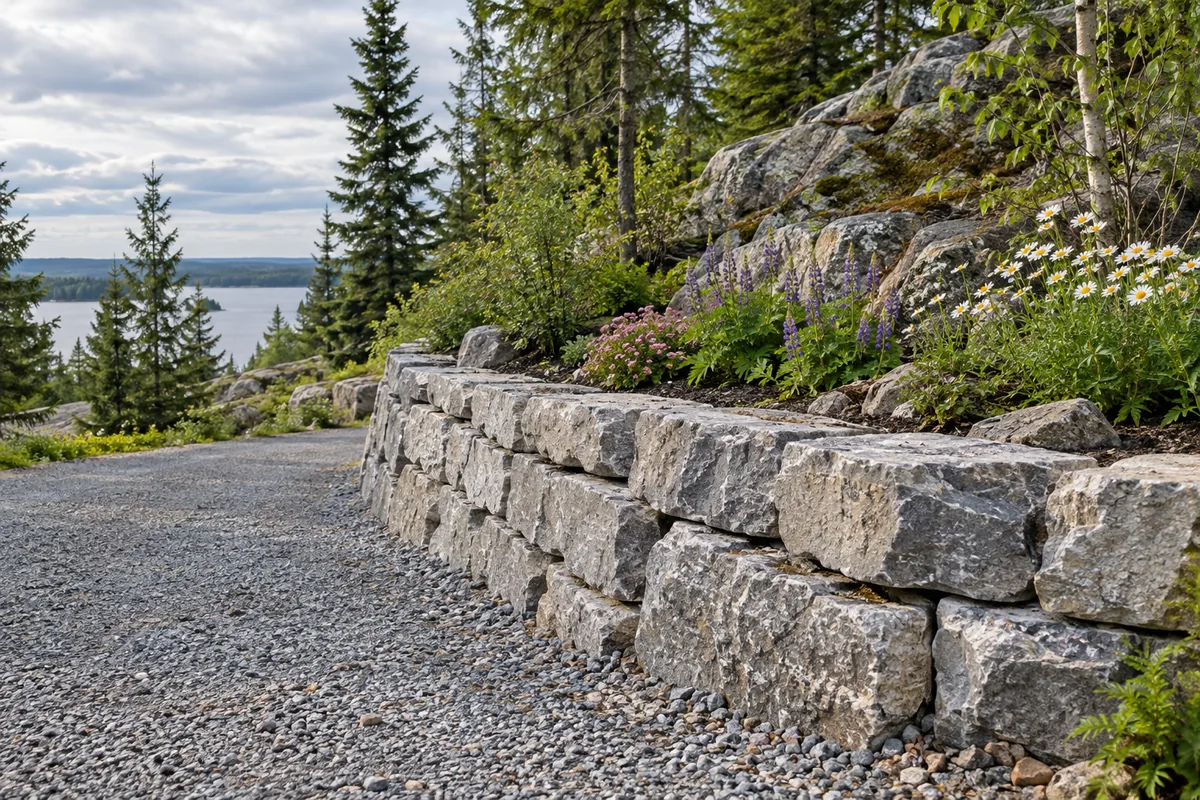
Runoff above an erosion-control wall must be managed because concentrated water can carry soil toward the retained edge and then scour a route around the structure. The problem may start well uphill of the proposed wall, including at a driveway or downspout. If only the lower damaged area is repaired, the same flow can cut a new channel after the next storm. We look for the collection area and the intended route to a suitable outlet. Surface grading, interception, or another drainage measure may be necessary. The wall's internal drainage has a separate role and should not be expected to absorb every uphill flow. A coordinated plan makes the wall one part of controlling soil and water together.
Does armour stone suit an eroding residential bank?
Armour stone can suit an eroding residential bank when a designed retaining layout, stable foundation, and controlled water route can be established. Large blocks offer a substantial finish, but placing them on loose or washed-out soil does not create reliable support. The proposed excavation must reach conditions appropriate for the design and allow for the required wall depth. Otherwise, the new stone may settle while water continues to remove material around it. We assess access for machinery and the available space before choosing the stone arrangement. Some banks are better addressed with terraces or a different retaining system. The correct material is the one that fits the assessed mechanism and geometry, not simply the heaviest stone available.
Can terracing reduce a steep yard's maintenance problems?
Terracing can reduce the length of a steep uninterrupted slope and create smaller areas that are easier to plant or maintain. The benefit depends on useful terrace widths and a layout suited to the ground. Closely spaced upper walls can load lower walls, while poorly drained platforms may collect water. Treating each tier as an independent garden edge can miss those effects. We review the full rise, available depth, and intended maintenance route before setting the tiers. Planting or surface protection between walls can help protect exposed soil once established. Our terraced armour stone page explains the space and access considerations in more detail. Terracing should improve the way the property works, not create several narrow strips that remain difficult to manage.
What should happen while an eroding area awaits work?
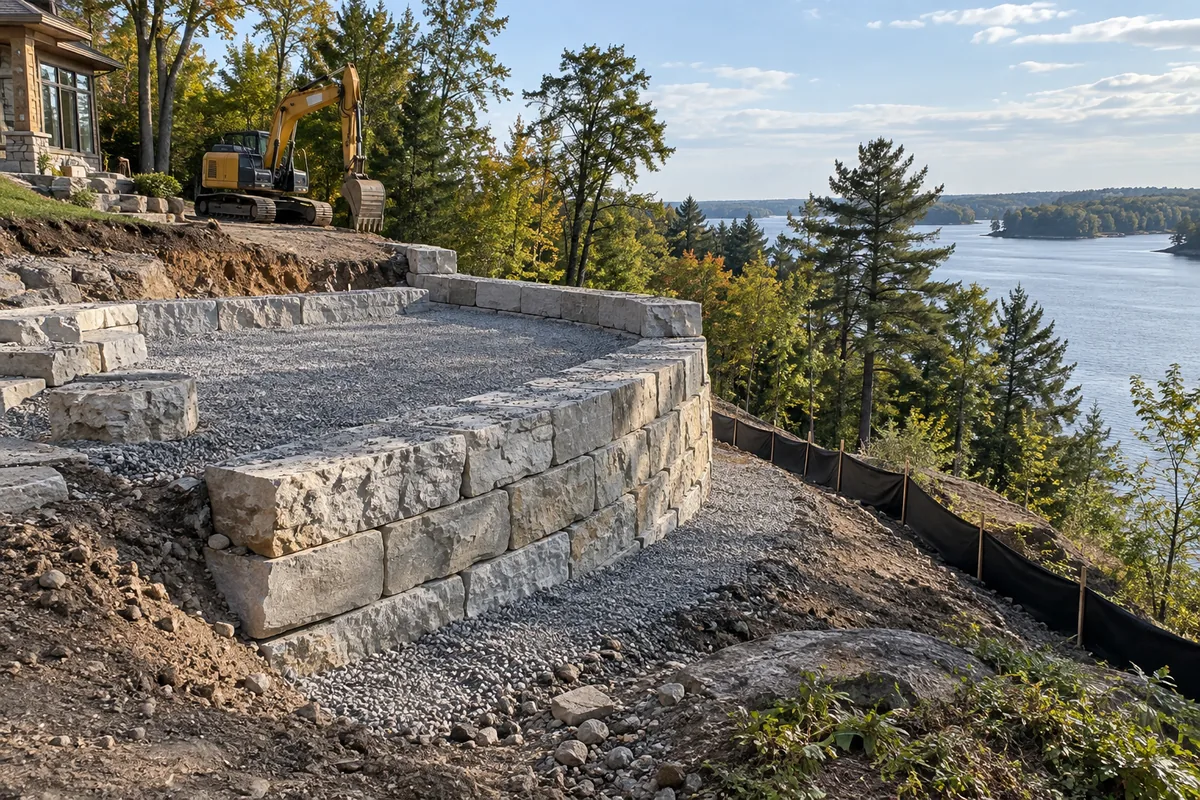
An eroding area awaiting permanent work may need temporary protection based on its condition, especially where runoff is carrying sediment toward paths, drains, or nearby water. The appropriate measure depends on flow and ground stability, so improvised dumping of stone or soil may make matters worse. Heavy materials placed above a suspect slope can also add load. We discuss the visible condition and whether a specialist assessment is needed before construction. Keep normal use away from ground that is cracking, falling, or visibly shifting. For projects near watercourses or wetlands, provincial requirements must be checked before disturbance. Temporary measures should support the eventual approved plan rather than create a second problem that must be removed later.
What helps define an erosion-control wall project?
An erosion-control wall project is easier to assess when the owner can describe the affected area, what lies above and below it, and how the condition has changed. Note whether the problem follows storms, spring thaw, a recent excavation, or new drainage work. Those observations help identify likely questions without pretending that a photo alone establishes the cause. Include your Greater Moncton location, approximate slope dimensions, and any nearby buildings or access routes. We use the enquiry to discuss the appropriate next step and the wall options that may fit. If an existing structure is leaning or losing backfill, the retaining wall replacement service may be the more direct starting point. If standing water dominates the problem, review drainage first.
Discuss your project
Share the location, scope, timing, and any site conditions that may affect the work.