
Moncton, NB
Driveway retaining walls in Moncton
Driveway retaining walls support a grade change beside a vehicle area where sloping ground limits access or the pavement edge is losing support. We install stone and block retaining walls for Moncton homes and commercial properties. This page explains why vehicle loads, runoff, edge setbacks, and construction access must be considered before selecting a wall.
Why is a wall beside a driveway different from a garden wall?
A driveway retaining wall may carry pressure from vehicles as well as the retained ground, so its design cannot be based on appearance alone. Parking, turning, and delivery activity can place loads near the wall edge. Even a relatively low wall can need a designed solution when vehicles operate above it. If that extra load is overlooked, movement may affect the wall and the supported surface. We establish the wall position relative to the driveway and ask what vehicles use the space. Cars, work trucks, and service vehicles do not create the same conditions. The assessment must also identify whether the wall retains the driveway or holds an uphill bank beside it, because those are different arrangements.
Can a retaining wall create a wider parking area?
A retaining wall may help create usable driveway width when the property boundaries, available foundation space, drainage, and structural design allow it. The extra space comes from a planned change in grade, not simply placing stone at the existing edge and filling behind it. Uncontrolled fill can settle and leave the new driving surface uneven. The supporting ground and compaction requirements need attention before paving or aggregate is finished. We review the desired parking layout and the turning space rather than treating width as the only goal. Setbacks, utilities, drainage easements, and local approval requirements may limit the proposed extension. Confirming those constraints early helps avoid a wall that cannot support the intended vehicle area.
How should runoff from a driveway be managed?
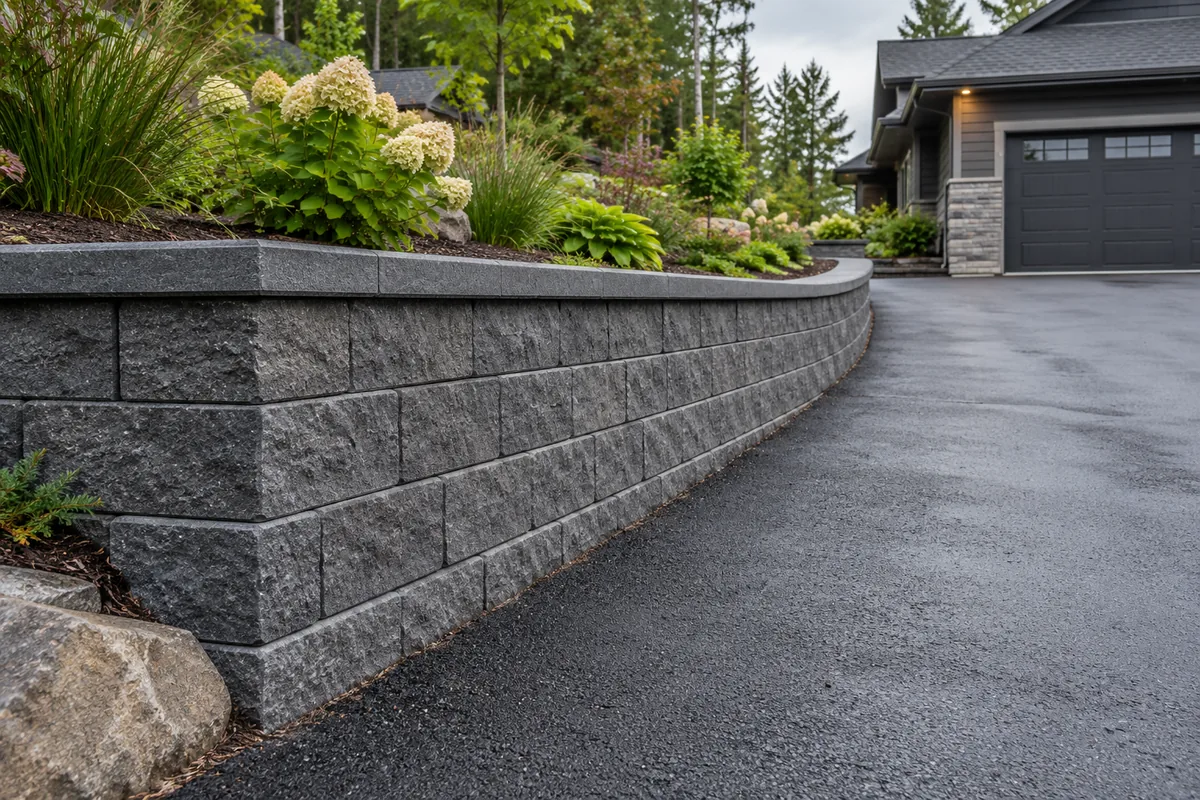
Driveway runoff should be directed toward an appropriate collection or discharge point without pouring uncontrolled water into the retaining wall backfill. Hard surfaces shed water quickly, so a small change in pavement slope can create a concentrated flow. At a wall, that flow may wash fines out of the base or keep the ground wet. We assess where water arrives, how it moves along the driveway, and where it can lawfully go. A surface channel, adjusted grading, or a separate drainage feature may be needed in addition to wall drainage. The right choice depends on elevations and outlet conditions. A retaining wall alone is not a reliable cure for a driveway that repeatedly floods from a larger drainage problem.
Is armour stone suitable beside vehicle access?
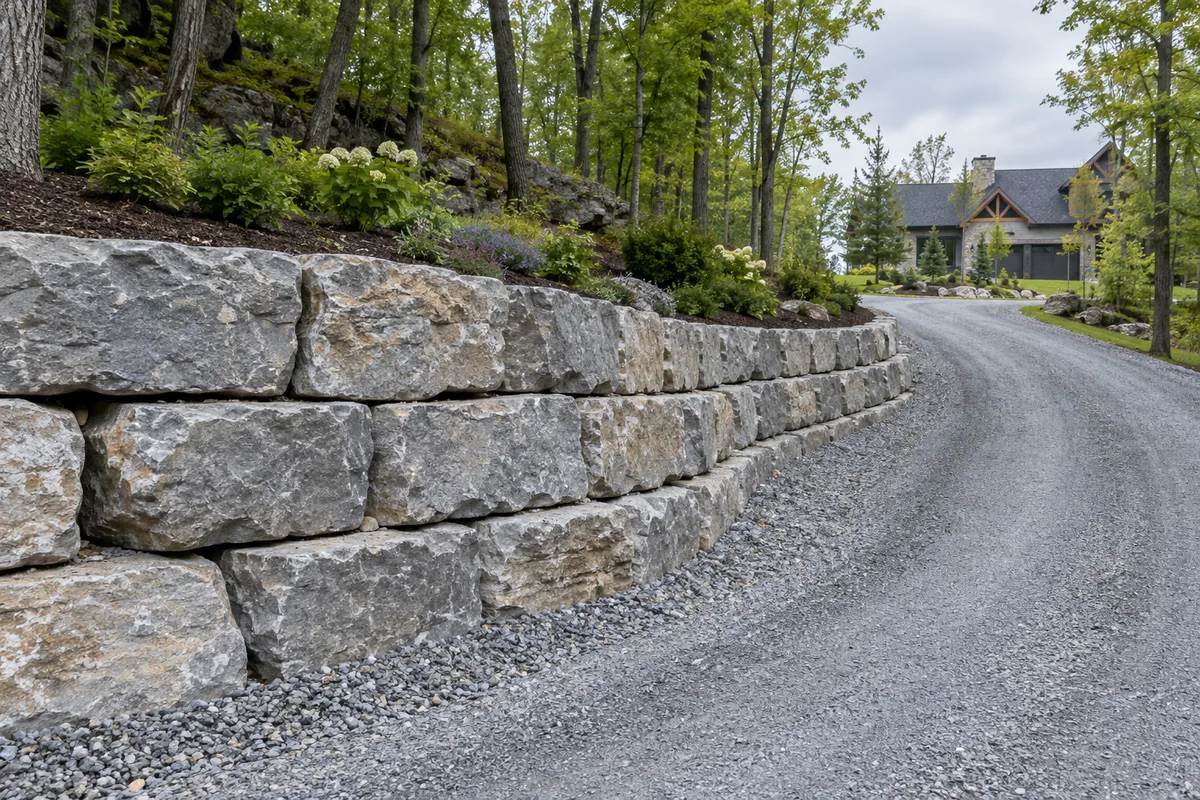
Armour stone can suit a driveway retaining wall where its depth, required layout, and machinery access fit the site-specific design. Its substantial face works well beside larger residential drives and landscaped commercial approaches. The stone footprint must not be confused with the visible edge, however. Space behind and below the face is needed for the structure and drainage. Where every centimetre is constrained, an engineered block system may be worth comparing. We discuss natural stone appearance alongside the load conditions and practical installation limits. The wall should never be assumed to serve as a vehicle barrier. Any required vehicle restraint or pedestrian protection must be evaluated and included as a separate designed feature.
What happens to driveway access during construction?
Driveway access during retaining wall work depends on excavation limits, equipment placement, and whether the existing surface relies on the wall for support. Some sites can preserve a clear route while others require temporary restrictions. Keeping vehicles too close to an open excavation can create a hazard and damage the work area. We discuss daily access needs, deliveries, bins, and alternative parking before the construction sequence is set. Commercial sites may need a plan for tenants and service traffic, while homes may need an agreed pedestrian route. These requirements belong in the scope rather than being left until excavation begins. Clear staging also protects the newly prepared work from traffic before it is ready.
Should a damaged wall be replaced before repaving?
A damaged driveway retaining wall should be assessed before repaving when wall movement, poor drainage, or loss of support may affect the new surface. Fresh asphalt or gravel cannot correct an unstable foundation beneath it. If the wall later needs excavation, part of that new surface may have to be disturbed again. Look for a widening gap at the edge, leaning units, recurring settlement, or soil escaping through the wall. Those signs do not identify a single cause, but they help define the assessment. We consider wall replacement and surface restoration together so the work follows a sensible order. The estimate should clearly state which paving, edging, or landscape repairs are included after the wall is complete.
What information is needed for a driveway wall quote?
A driveway wall quote starts with the property location, approximate wall length and height, current material, and the reason for the work. Explain whether you want more parking room, support for an existing edge, or control of an uphill bank. Include the types of vehicles that use the driveway and any regular delivery needs. These details matter because access and loads can change both the design and the work sequence. Plans or a survey are useful if available, but do not delay an initial enquiry to create them yourself. We can identify what further information is needed. Related services include commercial retaining walls for larger traffic areas and wall replacement when the existing structure is already moving.
Discuss your project
Share the location, scope, timing, and any site conditions that may affect the work.