
Moncton, NB
Replace a failing retaining wall in Moncton
Retaining wall replacement addresses a Moncton wall that can no longer be relied on in its current condition or no longer suits the property's needs. We replace stone and block retaining structures after reviewing visible movement, drainage, and the supported ground. Learn how assessment, removal, material selection, and restoration shape a properly defined rebuild.
Which warning signs call for a replacement assessment?
Leaning courses, widening gaps, displaced stones, repeated settlement, and backfill escaping through a wall are reasons to arrange a condition assessment. The signs may result from drainage problems, poor support, changed loads, or more than one cause. A surface crack or chipped cap does not automatically mean the entire wall needs replacement. Equally, pushing a displaced unit back into line may conceal a deeper issue. We look at the pattern across the wall and surrounding ground before discussing the scope. If movement appears active or the wall could affect a route or building, keep people and heavy items away from the affected area. The assessment should establish the problem before a new finish is selected.
Why should the original cause be identified before rebuilding?
The original cause should be identified before rebuilding because new materials can fail in the same way when the ground or water problem remains. A wall that settled on unsuitable fill needs a different response from one overloaded by a new driveway. Blocked drainage can also continue to affect a replacement if the outlet is never corrected. We ask about the wall's history, previous repairs, and nearby changes to the property. Available drawings or construction photos may provide useful context. The proposed rebuild should state how the identified issues will be addressed, including any required professional design. A replacement is an opportunity to improve the whole retaining system rather than repeat an old detail with a fresher face.
Can sound stone or blocks be reused?
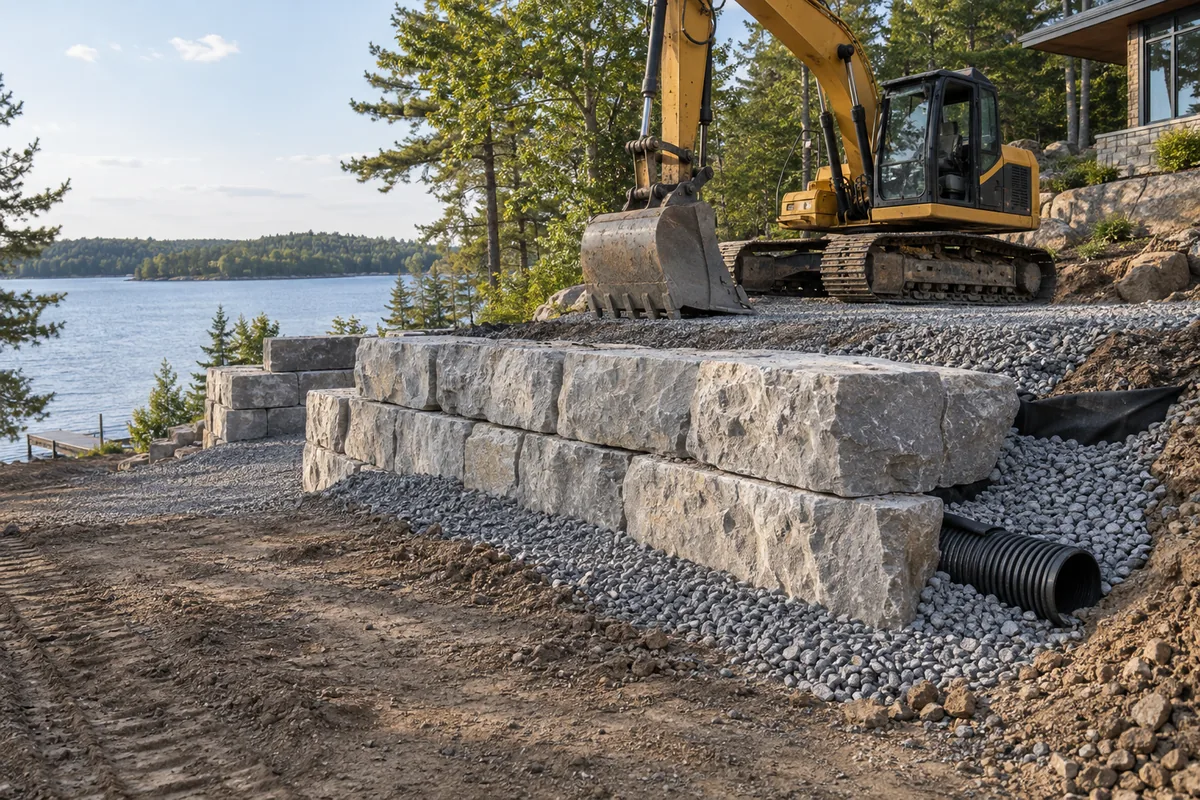
Sound stone or blocks may be reusable when their condition, dimensions, and compatibility suit the new design. Reuse is not guaranteed just because the pieces look intact from the front. Hidden damage, unsuitable shapes, mixed products, or limited quantities can affect whether they provide the needed performance and finish. Cleaning and handling also take time, which should be considered in the estimate. We discuss reuse as a project-specific option rather than a promise of automatic savings. Where matching older manufactured units is difficult, a complete material change may create a more consistent result. Any retained material must fit the new structure's requirements; preserving it should not force the replacement wall into an inadequate arrangement.
How is the supported ground protected during removal?
The supported ground is protected during removal through a planned sequence that considers what the existing wall holds and what lies nearby. Excavating the full length without reviewing those conditions can leave soil, pavement, or adjacent structures unsupported. Temporary support or a staged method may be required for some sites. We identify access limits and nearby loads before defining the removal approach. A driveway, patio, building, or upper retaining tier can change the work substantially. The scope should explain which surfaces must be temporarily restricted or removed and how they will be restored. Safe dismantling and disposal are part of a replacement project, not incidental steps that can be separated from the wall design.
Should the replacement keep the same height and location?
A replacement wall should keep the same height and location only when that arrangement remains suitable for the ground, intended use, and applicable requirements. The original wall may have been poorly positioned or lack space for drainage. A changed layout can sometimes create better access or distribute the grade through terraces. On other sites, boundaries and nearby structures leave limited options. We review the reason for replacing the wall and the desired result before assuming the old footprint is correct. Increasing height or moving the wall may affect loads, permits, and neighbouring features. Those changes need to be identified early so the estimate and any professional design address the proposed work rather than simply the existing appearance.
What restoration should be included after a rebuild?
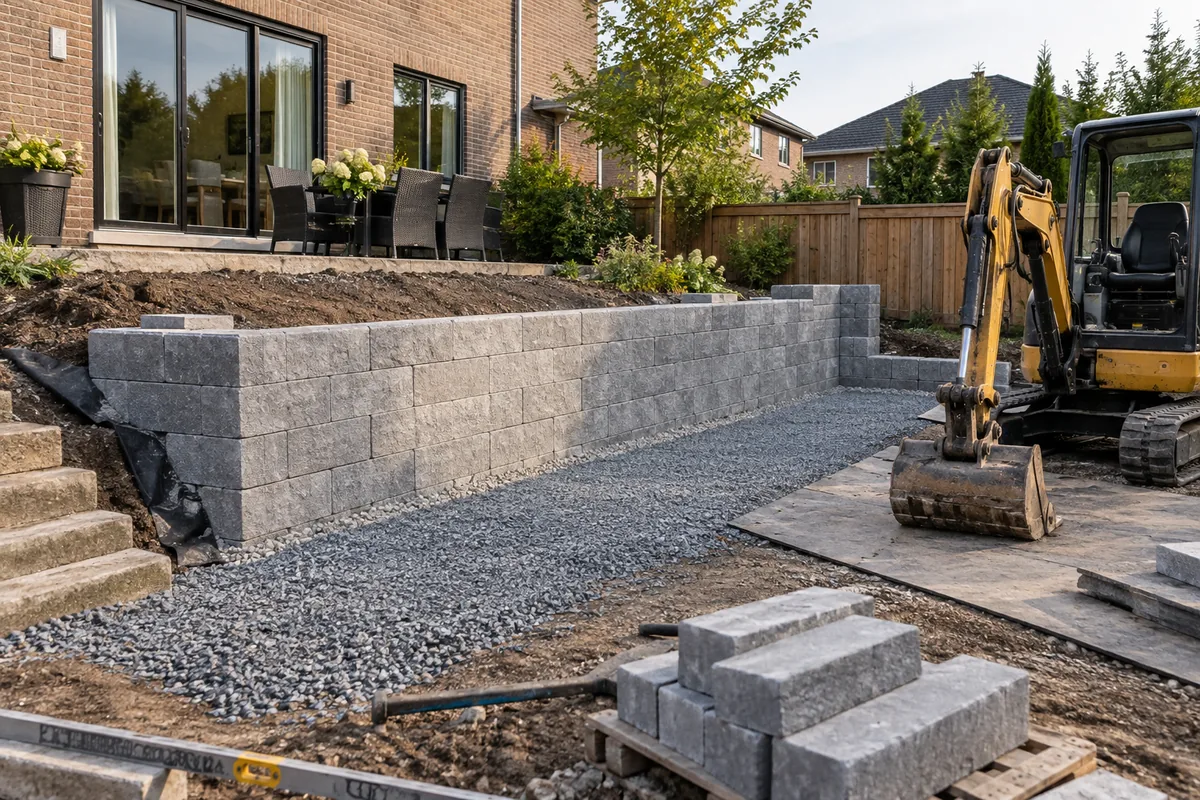
Restoration after a retaining wall rebuild should cover the surfaces disturbed by demolition, excavation, material staging, and equipment access. The work may affect lawn, planting, paving edges, fences, or drainage features beyond the wall face. If restoration is left vague, the owner can be left with a finished wall but an unfinished property. We define the areas and materials involved as part of the scope. Some items may be handled separately, but the responsibility and expected finish should still be clear. The rebuilt ground also needs its planned drainage route preserved during landscaping. Adding soil against outlets or changing final grades for appearance can compromise the work, so the handover should explain what must remain clear.
What information helps compare replacement quotes?
Replacement quotes are easier to compare when they state the removal method, disposal, proposed dimensions, new materials, foundation work, drainage, and restoration. Include whether existing materials will be reused and whether engineering or approvals are allowances or confirmed inclusions. A short price for rebuilding the face may exclude the investigation and preparation needed to address the cause. For your Moncton enquiry, describe the visible problem, approximate wall size, access, and what the wall supports. Mention any recent movement and previous repairs. We can discuss whether the next step is a closer assessment or a defined installation proposal. Our drainage and driveway wall pages provide additional context when water or vehicle loading is central to the replacement.
Discuss your project
Share the location, scope, timing, and any site conditions that may affect the work.