
Moncton, NB
Retaining wall drainage for Moncton properties
Retaining wall drainage addresses water that collects within or around a retaining structure on a Moncton property. We plan drainage with new walls and assess water-related concerns when discussing wall replacement. Learn how to distinguish a wall drainage problem from wider yard flooding, and what information helps identify an appropriate route for runoff.
Can a retaining wall solve a wet or flooded yard?
A retaining wall can be part of a wet-yard solution when the problem involves a grade change that needs support, but the wall alone does not remove water. Ponding may come from low ground, concentrated roof discharge, poor surface grading, or a larger drainage issue beyond the wall. Adding a barrier without understanding those sources can make water collect in a different place. We assess where the water arrives and where it can safely leave before recommending retaining work. Some properties need drainage or grading without a new wall. Tell us whether water appears after short storms, during snowmelt, or throughout wet periods, because the timing helps define the questions a site assessment must answer.
Why can water build pressure behind a wall?
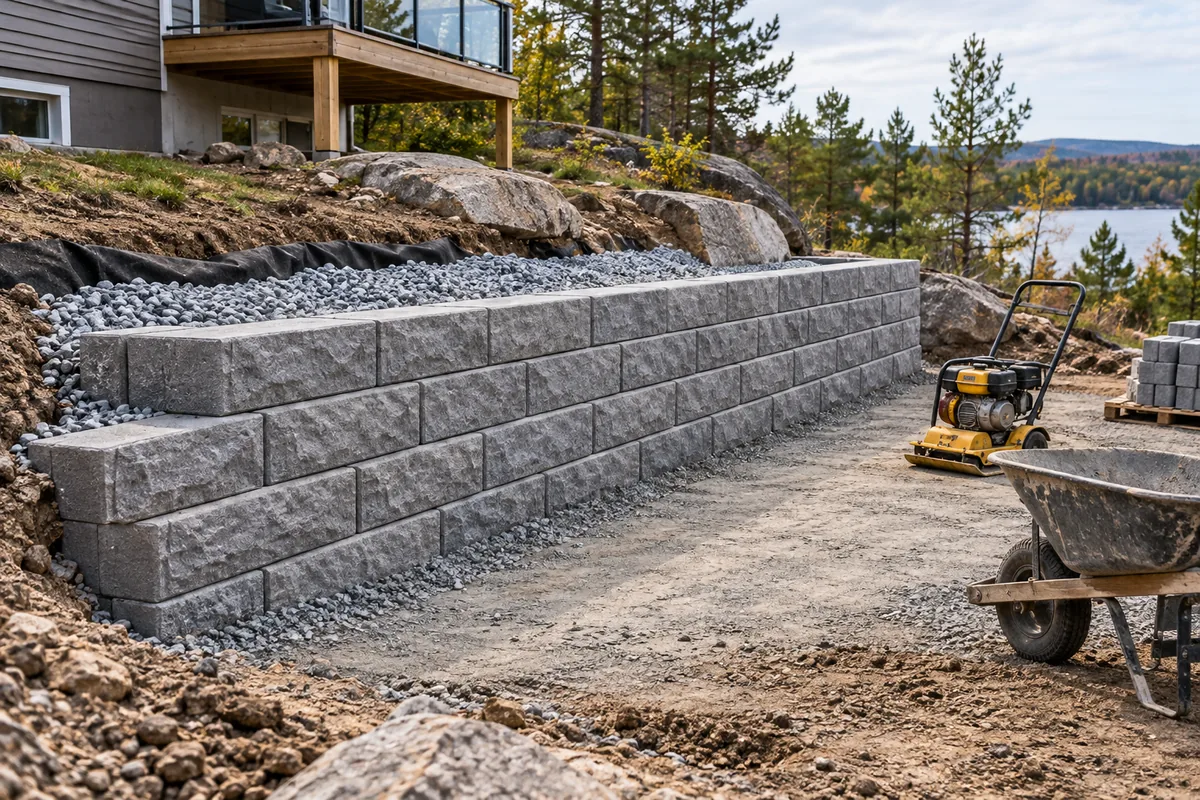
Water can build pressure behind a retaining wall when it enters retained soil faster than the drainage arrangement can remove it. Fine soil, blocked outlets, or a missing water route may contribute. The added pressure is separate from the weight of the soil, and persistent wetness can also affect support at the base. A wall face may look dry while the material behind it stays saturated. We consider the drainage zone, surrounding slopes, and any concentrated inflows together. Correct material selection and outlet details matter because a pipe buried without a working discharge route cannot provide the intended relief. The appropriate response may involve rebuilding part of the wall where drainage cannot otherwise be accessed properly.
What symptoms suggest the wall drainage needs attention?
Persistent seepage, muddy discharge, washed-out soil, recurring ponding, and wall movement can indicate that retaining wall drainage deserves assessment. None of those signs proves one particular failure, and staining alone is not a structural diagnosis. The pattern and timing are useful: water after a downpour suggests different questions from a wet patch during dry weather. Ignoring a changing condition can allow further soil loss or movement. We ask owners to describe when the symptoms began and whether drainage or landscaping was recently altered nearby. Take photographs from a safe location rather than digging behind a suspect wall. If the wall is visibly unstable, keep people and heavy loads away while the condition is reviewed.
Where should water from a retaining wall discharge?
Water from a retaining wall needs an appropriate, permitted destination that can receive the flow without eroding the ground or creating a problem elsewhere. The location and elevation of that outlet help determine whether the proposed drainage arrangement will work. Sending water through a pipe to an unknown low point is not a complete plan. We review the receiving area and any existing site drainage before defining the work. Property boundaries, municipal systems, and environmental constraints can limit the options. A drain should also remain accessible enough for its intended maintenance. If there is no suitable gravity outlet, the drainage and wall concept may need further professional assessment rather than a promise that adding gravel will solve the issue.
Should roof runoff enter the wall drainage system?
Roof runoff should not be assumed to belong in a retaining wall drainage system because downspouts can deliver concentrated volumes beyond the wall's incidental drainage needs. Connecting them without design can overload a small outlet or keep backfill saturated. Water can also erode an unprotected discharge area at the wall base. We identify downspout locations and surface paths when planning retaining work, then consider separate routing where needed. The final approach must suit the property elevations and applicable drainage requirements. A homeowner should mention any recent roof drainage changes, extensions, or new paved areas. Those changes can explain why a wall that previously appeared dry now receives more water during storms.
Can drainage be added to an existing wall?
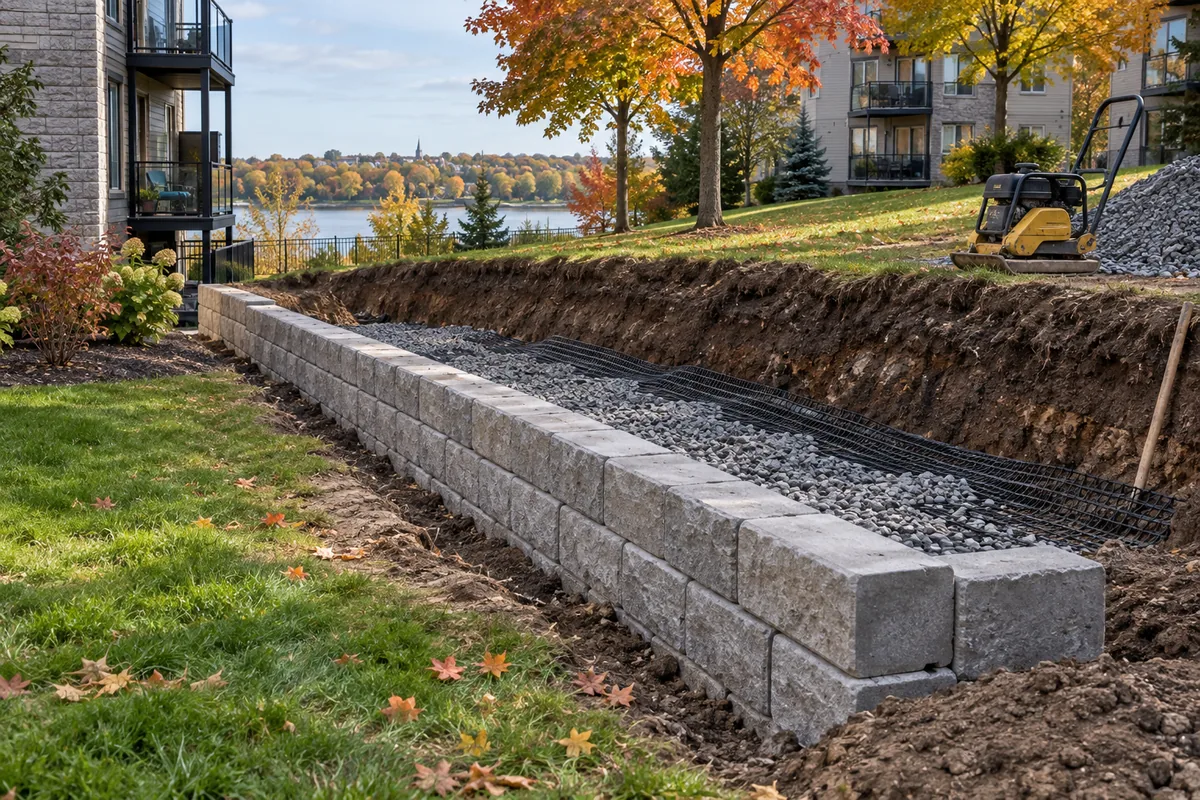
Drainage can sometimes be improved around an existing retaining wall, but access to the retained side and the wall's condition determine what is practical. Surface grading or an accessible blocked outlet may be addressed without a full rebuild. Missing backfill drainage behind a moving wall is a different problem. Excavating there can affect stability, so the work needs a considered sequence. We assess whether the existing materials and structure are suitable to keep before proposing an addition. Drilling holes through a wall without understanding its construction is not a general repair method. A replacement project may offer the clearest opportunity to correct the foundation, drainage, and finish together when the existing system has several deficiencies.
What drainage observations help with an estimate?
Useful drainage observations include where water first appears, its route across the property, how long it remains, and whether soil or debris moves with it. Approximate wall dimensions and photos of visible outlets add context. These details help separate surface runoff from a persistent wet-ground condition before anyone commits to a particular wall detail. For Moncton, Dieppe, and Riverview enquiries, explain whether the problem affects a lawn, driveway, building approach, or commercial operating area. Do not enter standing water or approach unstable ground to gather information. We can discuss the next assessment steps from a safe description. Related erosion-control work may be needed when runoff is carrying away soil, while replacement may be appropriate where wall movement is already present.
Discuss your project
Share the location, scope, timing, and any site conditions that may affect the work.